Photography Gear Investment Tracking: Understand Your Equipment's True Value
Track your photography gear investment like a business asset. Monitor depreciation, plan upgrades, and make data-driven purchasing decisions.
 Dylan AndersenPublished 7 min read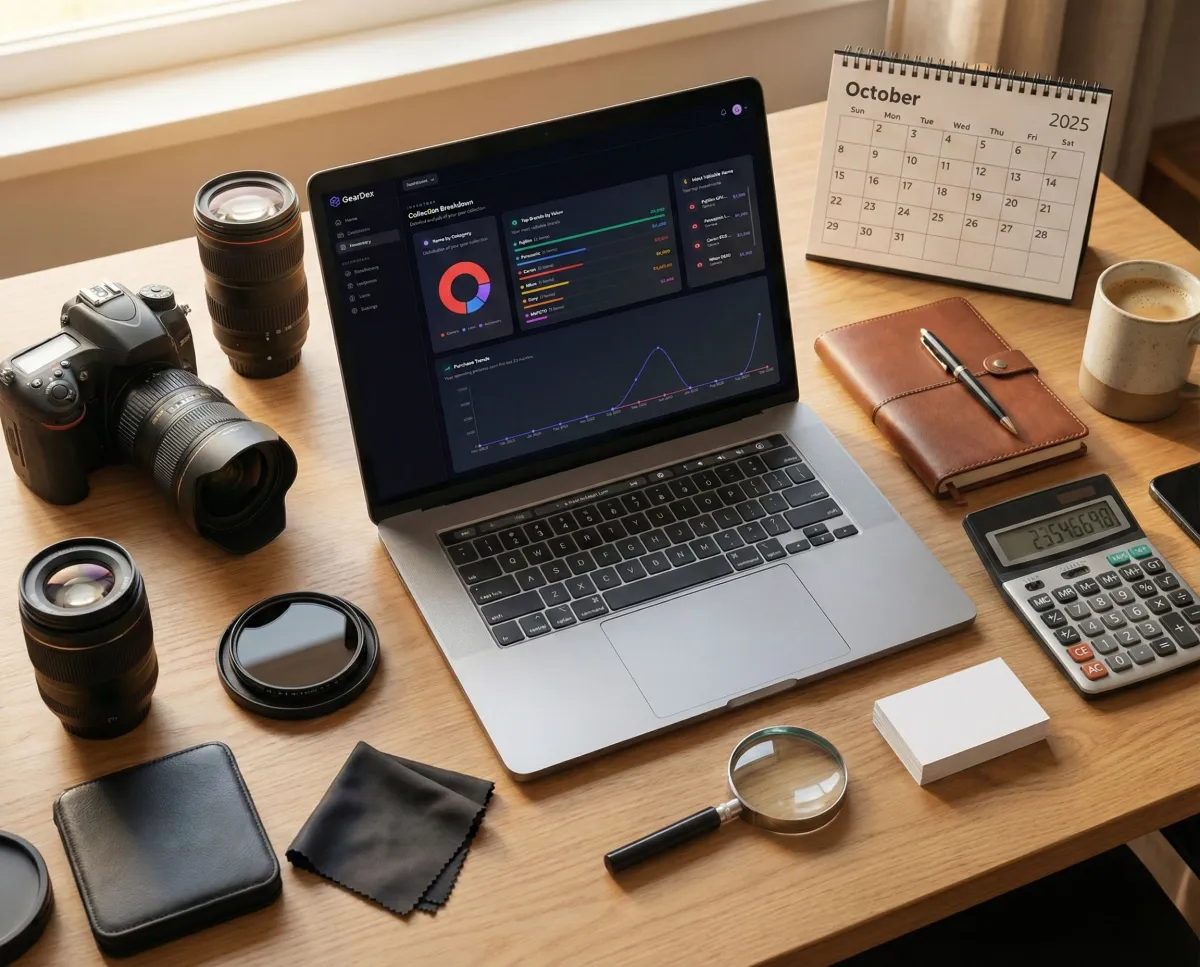
In this guide
As a professional photographer, your equipment isn't just tools—it's a business asset that depreciates, requires maintenance, and impacts your bottom line. Yet many photographers track gear purchases like personal hobbies rather than business investments, missing opportunities for tax deductions, optimal upgrade timing, and accurate financial planning.
If you can't answer "what's my total equipment value right now?" or "how much has my gear depreciated this year?" within seconds, you're leaving money on the table.
Understanding Gear as Business Investment
Your camera bodies, lenses, lighting, and accessories represent capital expenditures that generate revenue. Like any business asset, they have:
- Initial cost: The purchase price you paid
- Current value: What it's worth today on the used market
- Depreciation: The loss in value over time
- Maintenance costs: Ongoing expenses for repairs and upkeep
- Replacement timeline: When you'll need to upgrade or replace
Professional photographers should treat gear like the business investments they are, tracking acquisition costs, monitoring value changes, and making data-driven decisions about when to sell, upgrade, or hold.
Depreciation Curves for Cameras vs. Lenses
Not all photography equipment depreciates equally. Understanding the curves helps you make smarter purchasing decisions.
Camera Bodies: Rapid Depreciation
Camera bodies lose value fastest, typically following this pattern:
- Year 1: 20-30% value loss (new model announcement kills resale)
- Year 2: Additional 15-20% loss
- Year 3-5: 10-15% per year as newer models release
- Year 5+: Stabilizes at 30-40% of original price
A $3,000 camera body might be worth $2,000 after one year, $1,500 after two years, and plateau around $1,200 after five years. Frequent new releases from manufacturers accelerate this depreciation.
Lenses: Slower, More Stable
Quality lenses hold value better:
- Year 1: 10-15% value loss
- Year 2-5: 5-10% per year
- Year 5+: Often stabilizes at 50-60% of original price
Premium lenses (Canon L-series, Nikon gold ring, Sony G Master) can even appreciate if discontinued and in high demand. A $2,000 lens might still sell for $1,400-1,600 after five years of use.
Lighting and Accessories
Strobes, modifiers, and accessories depreciate moderately—around 15-20% per year initially, then stabilizing. Build quality matters more here; cheap gear becomes worthless fast, while professional equipment retains decent resale value.
Total Cost of Ownership Calculations
Purchase price is just the beginning. True cost of ownership includes:
- Depreciation: The value lost from purchase to eventual sale
- Maintenance: Sensor cleaning, lens calibration, repairs
- Insurance: Annual premiums to protect your investment
- Opportunity cost: Could that $5,000 invested elsewhere earn better returns?
Example: A $3,000 camera body you use for three years:
- Purchase price: $3,000
- Resale after 3 years: $1,500
- Depreciation cost: $1,500
- Maintenance (sensor cleaning, repairs): $300
- Insurance (3 years × $200): $600
- Total cost: $2,400 over 3 years = $800/year
Understanding these true costs helps you price services appropriately and decide whether renting vs. buying makes financial sense for infrequently-used equipment.
When to Upgrade vs. Repair
Every photographer faces this decision: should I repair this aging camera or upgrade to a new body?
The Repair Threshold Rule
If repair costs exceed 50% of current market value, upgrade instead. A $600 shutter replacement on a camera worth $800 doesn't make financial sense when you could sell it as-is for $500 and apply that toward a new body.
The Revenue Impact Test
If equipment limitations cost you jobs or client satisfaction, upgrade immediately. Losing a $3,000 wedding because your autofocus is unreliable justifies a new camera body investment.
The Technology Gap Analysis
When your current gear is more than two generations behind current models and competitors are delivering notably better image quality or features clients expect (like eye-tracking AF), the upgrade becomes necessary.
Tax Deduction Documentation
Photography equipment qualifies for business tax deductions, but only if you maintain proper records. The IRS requires:
- Purchase receipts: Proof of cost and purchase date
- Business use percentage: If you also use gear personally, document business vs. personal use
- Depreciation schedules: Spreading deductions over equipment lifespan (typically 5-7 years for cameras)
- Section 179 elections: Option to deduct full cost in year of purchase (up to limits)
Professional gear tracking systems maintain this documentation automatically, generating tax reports that show total equipment value, annual depreciation, and qualified deductions. Come tax time, you export everything instead of scrambling through old emails for receipts.
Analytics for Smart Purchasing Decisions
Data-driven photographers make better investment decisions:
Usage Analytics
Track how often you actually use each piece of equipment. That $4,000 tilt-shift lens used twice a year? Renting would cost $400 total vs. $4,000 purchase plus depreciation. Conversely, heavily-used workhorse lenses justify premium purchases.
Revenue Attribution
Which equipment generates the most revenue? If your 85mm f/1.4 contributes to 60% of your portrait bookings, investing in the best possible version makes business sense.
Depreciation Forecasting
Project future values based on historical depreciation curves. Plan upgrades when resale value is still strong rather than waiting until equipment is nearly worthless.
GearDex's Value Tracking Features
GearDex treats your photography equipment as the business investment it is:
- Automatic value tracking: Monitor current market values and depreciation
- Total portfolio value: See your entire equipment investment at a glance
- Depreciation reports: Generate tax documentation for accountants
- Purchase history: Track acquisition costs and dates
- Resale timing alerts: Get notified when optimal to sell before value drops further
- ROI calculations: Understand cost per use for each piece of equipment
Conclusion
Professional photographers run businesses, and businesses track asset values. Whether you're claiming tax deductions, planning upgrades, or deciding between repair and replacement, accurate investment tracking provides the data you need for smart decisions.
Start by documenting your current equipment—purchase prices, dates, and receipts. Monitor depreciation patterns and understand true cost of ownership. Make upgrade decisions based on numbers, not emotions.
Your gear represents a significant business investment. Track it professionally with GearDex and maximize the return on every dollar spent.