The Ultimate Camera Inventory Management System for Professional Photographers
Discover how professional photographers use camera inventory management systems to track thousands in equipment, prevent loss, and maximize insurance coverage.
 The GearDex TeamPublished 8 min read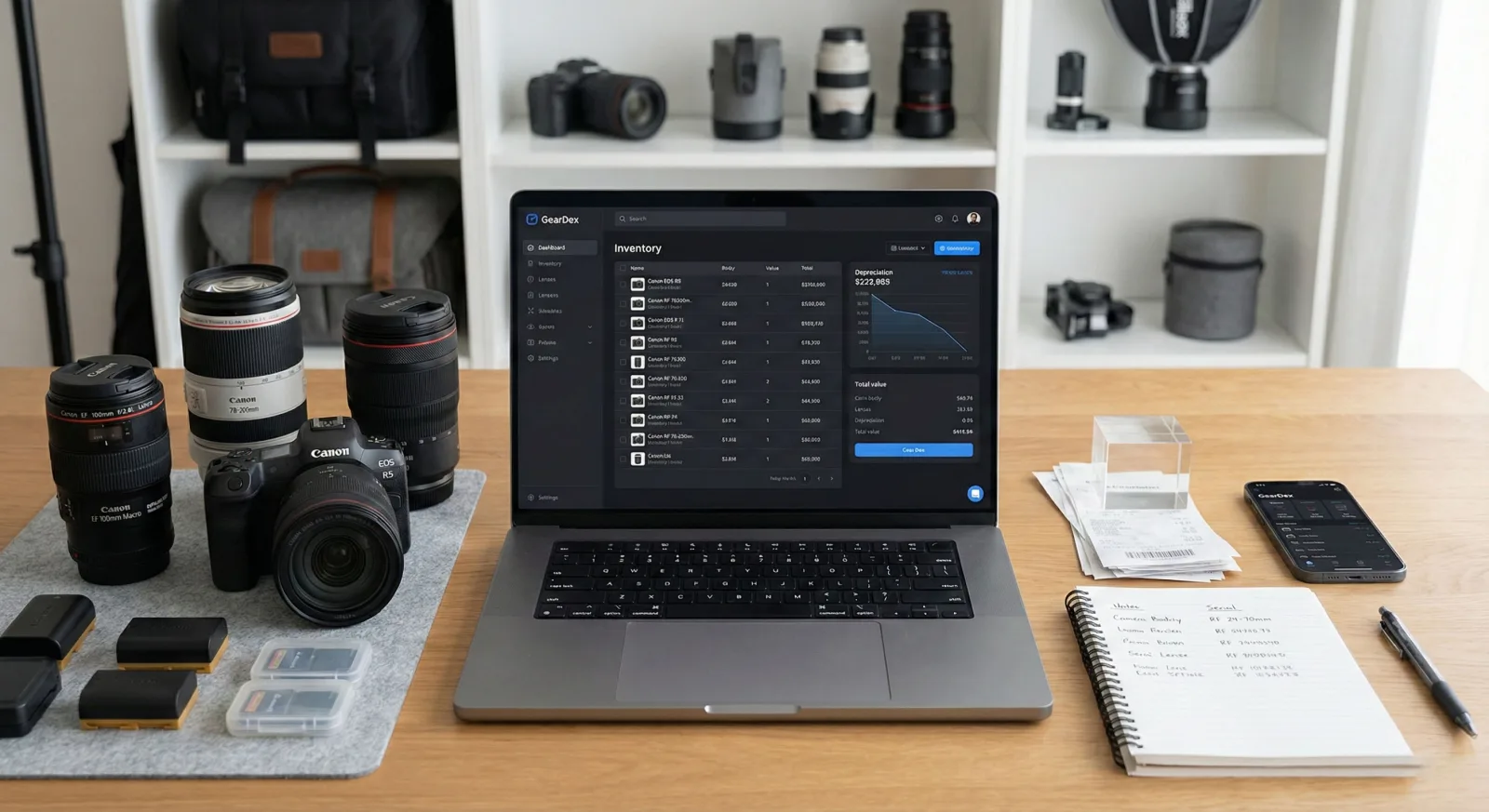
In this guide
As a professional photographer, you've probably invested tens of thousands of dollars in camera bodies, lenses, and accessories. But do you know exactly what you own, where it is, and what it's worth right now? If you're like most photographers, the answer is probably "not really."
The average professional photographer owns equipment worth $30,000 to $100,000, yet many still track their gear using spreadsheets, notes apps, or—worse—nothing at all. This approach works until something goes wrong: a lens goes missing, insurance asks for documentation, or you need to file a claim for damaged equipment.
Why Spreadsheets Fail for Camera Inventory
Spreadsheets seem like the obvious choice for tracking gear—they're free, flexible, and familiar. But they fall short when your inventory grows beyond a few items. Here's why:
- No visual reference: Without photos, it's hard to verify which camera body or lens you're looking at, especially when you own multiple versions
- Manual depreciation tracking: Equipment values change over time, and manually updating prices is tedious and error-prone
- Missing metadata: Serial numbers, purchase dates, warranty expiration—all critical for insurance claims but easy to forget in a spreadsheet
- No collaboration: If you work with assistants or studio partners, sharing and updating a spreadsheet becomes a nightmare
- Limited search: Finding a specific item when you own 50+ pieces of gear means scrolling through endless rows
The moment you need to file an insurance claim, you realize your spreadsheet is missing half the information required. Professional camera inventory management systems solve these problems with purpose-built features for photographers.
Key Features of Professional Inventory Systems
Modern inventory management systems designed for photographers go far beyond simple lists. Here's what to look for:
Visual Cataloging
Upload photos of each item to quickly identify equipment at a glance. This is especially valuable when you own multiple camera bodies or similar lenses. Visual inventory makes pre-shoot gear checks faster and helps assistants identify the right equipment.
Automatic Value Tracking
Your gear depreciates over time, but tracking those changes manually is impractical. Professional systems monitor market values and calculate depreciation automatically, giving you an accurate picture of your total inventory worth for tax purposes and insurance coverage adjustments.
Complete Metadata Management
Store everything about each item in one place:
- Serial numbers (critical for theft recovery and insurance claims)
- Purchase dates and receipts
- Warranty information and expiration dates
- Service history and maintenance schedules
- Original purchase price and current market value
- Location tracking (studio, home, on loan, etc.)
Smart Organization
Tag and categorize equipment by type, brand, location, or custom categories. Search across your entire inventory instantly, filter by status (available, on loan, in repair), and create custom collections for different shoot types.
Real-World Case Study: Wedding Photographer Managing 15+ Cameras
Sarah, a wedding photographer based in Los Angeles, owns 6 camera bodies, 12 lenses, and dozens of accessories worth over $60,000. Before switching to a dedicated inventory system, she tracked everything in Google Sheets.
Her wake-up call came when a lens went missing after a destination wedding. She couldn't remember if she'd packed it, lent it to her second shooter, or left it at the venue. Without tracking, she spent hours searching and eventually filed an insurance claim—only to discover she couldn't prove the purchase date or serial number.
After implementing proper camera inventory management, Sarah now:
- Checks equipment in/out before and after every shoot
- Tracks which lenses are with her second shooter or assistant
- Receives maintenance reminders for sensor cleaning and calibration
- Knows exactly what her insurance coverage should be based on current values
- Exports complete equipment lists for insurance renewals in seconds
"The ROI was immediate," Sarah says. "I saved hours each month on organization, and when I did need to file a claim later for damaged equipment, I had everything documented. The claim was approved in days."
How to Get Started with Camera Inventory Management
Ready to bring your gear tracking into the 21st century? Here's a practical roadmap:
Step 1: Audit Your Current Gear
Set aside a few hours to gather every piece of equipment you own. Photograph each item, locate serial numbers (usually on the bottom of cameras or around the lens mount), and dig up purchase receipts if you still have them.
Step 2: Choose the Right System
Look for camera inventory management software specifically designed for photographers, not generic asset tracking tools. Key features should include:
- Photography-specific categories (camera bodies, lenses, lighting, accessories)
- Automatic value tracking and depreciation
- Insurance document generation
- Mobile access for on-location gear checks
- Loan and location tracking
Step 3: Input Your Inventory
Start with your most valuable items—camera bodies and lenses. Add photos, serial numbers, purchase information, and current market values. Many systems can automatically look up specifications based on make and model, saving you time.
Step 4: Establish Maintenance Routines
Set up recurring reminders for sensor cleaning, lens calibration, and warranty expirations. Update location status when lending gear or taking it on location. Regular maintenance prevents problems and extends equipment life.
Step 5: Keep Your Insurance Updated
As your inventory value changes, make sure your insurance coverage matches. Generate updated equipment lists quarterly and send them to your insurance provider to ensure you're properly covered.
The GearDex Approach
At GearDex, we built our camera inventory management system specifically for photographers who take their equipment seriously. Our platform combines visual cataloging, automatic value tracking, maintenance scheduling, and detailed analytics in an interface that actually makes sense for creative professionals.
Whether you're a solo wedding photographer or run a multi-photographer studio, GearDex helps you stay organized, protected, and ready to shoot. Track your entire kit, monitor equipment value, manage loans, and generate insurance documentation—all from one clean, photographer-friendly platform.
Conclusion
Your camera equipment represents a major business investment that deserves professional management. Spreadsheets and sticky notes might seem adequate until you face a lost lens, damaged gear, or insurance claim. Investing in proper camera inventory management saves time, reduces stress, and protects your financial investment.
Start with a complete gear audit, choose photography-specific software, and build habits around regular updates and maintenance. Your future self—and your accountant—will thank you.