Photography Gear Organizer: A Better System Than a Spreadsheet
Build a photography gear organizer that tracks serial numbers, receipts, locations, values, maintenance, and shoot readiness without spreadsheet upkeep.
 Dylan AndersenPublished 8 min read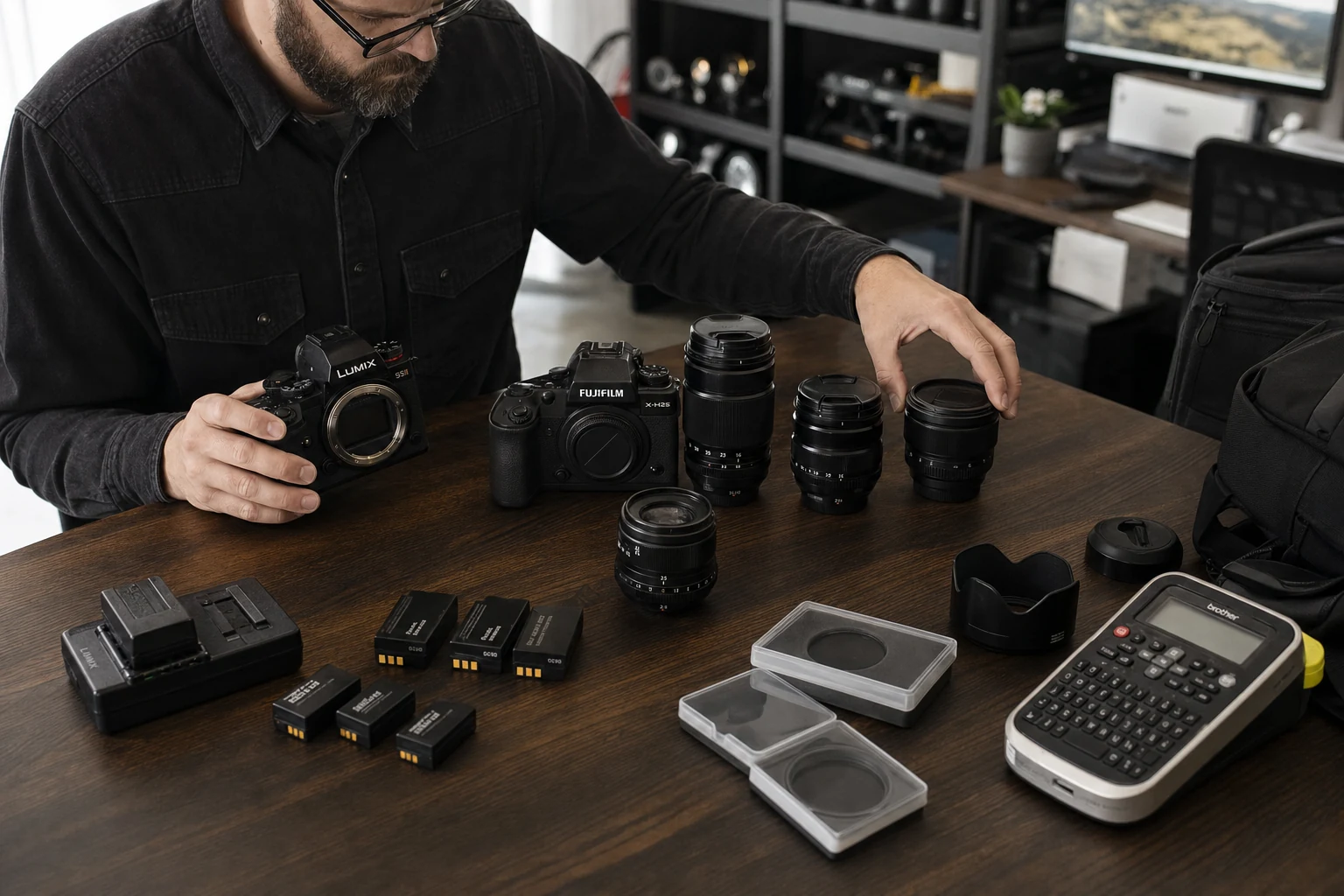
In this guide
The short answer
A useful photography gear organizer connects each physical item to its serial number, proof of purchase, current location, condition, value, and availability. A spreadsheet can list gear, but dedicated camera inventory software keeps those records attached to the work photographers do before, during, and after a shoot.
What should a photography gear organizer track?
Start with identity, evidence, and movement. Identity tells you exactly what an item is. Evidence proves that you own it. Movement tells you where it is and whether it is ready for the next job.
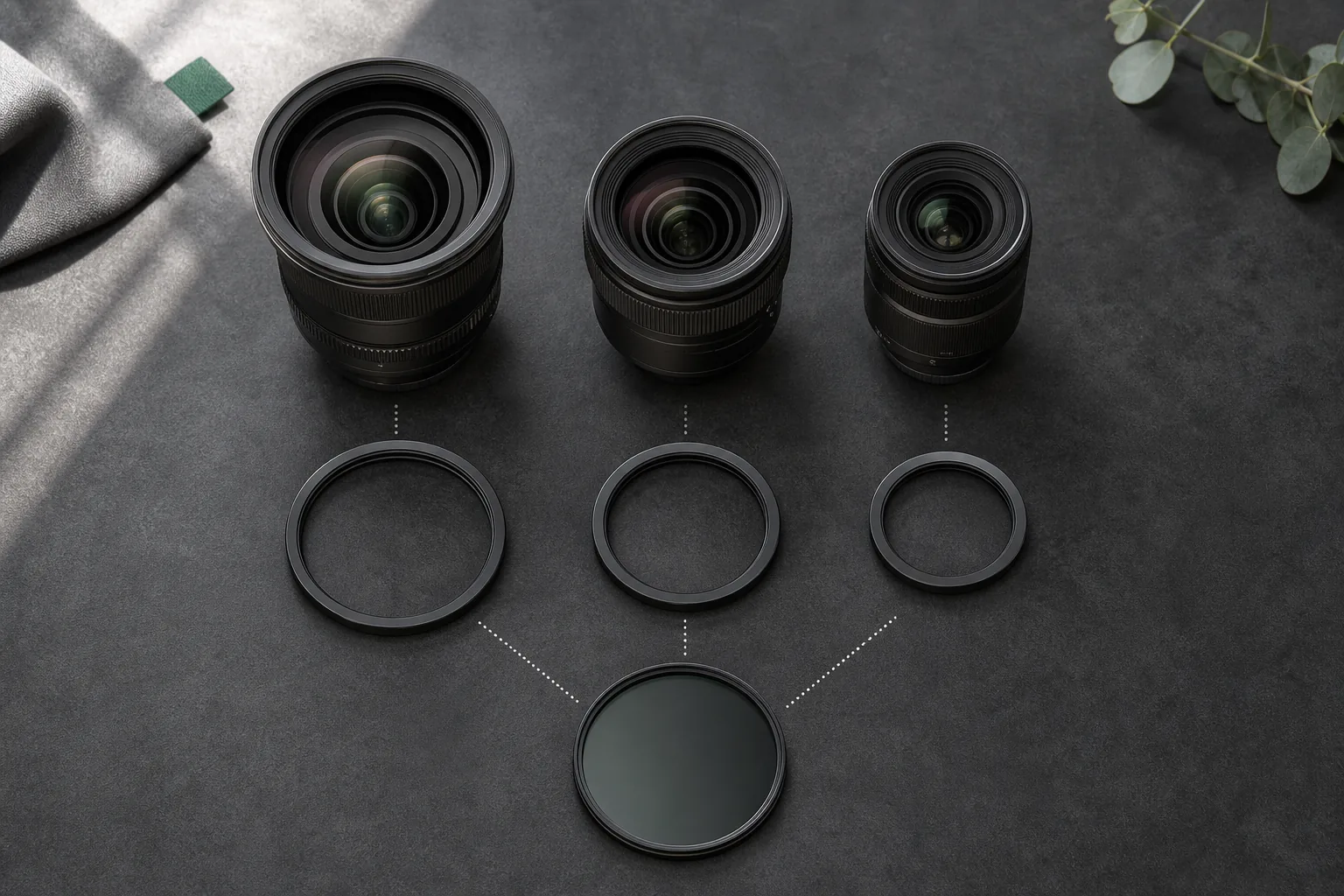
That means a camera body needs more than a model name. Record the serial number, purchase date, purchase price, receipt, item photos, current value, storage location, condition, warranty, maintenance history, and loan status. Lenses also need mount and filter-size details. Accessories need enough description to separate one nearly identical cable, battery, or adapter from another.
- Identity
- Make, model, serial number, category, mount, and a clear photo.
- Ownership
- Receipt, seller, purchase date, purchase price, and warranty document.
- Readiness
- Condition, maintenance status, batteries or supporting parts, and notes.
- Movement
- Location, assigned kit, borrower, due date, and return history.
- Value
- Original cost, current estimate, replacement context, and last review date.
How do you organize the physical gear and the digital record?
Use the same names in the room and in the software. If the shelf label says “Case B,” do not call it “Wedding Backup” in your inventory. Consistent location names make a digital record useful when someone else is packing the bag.
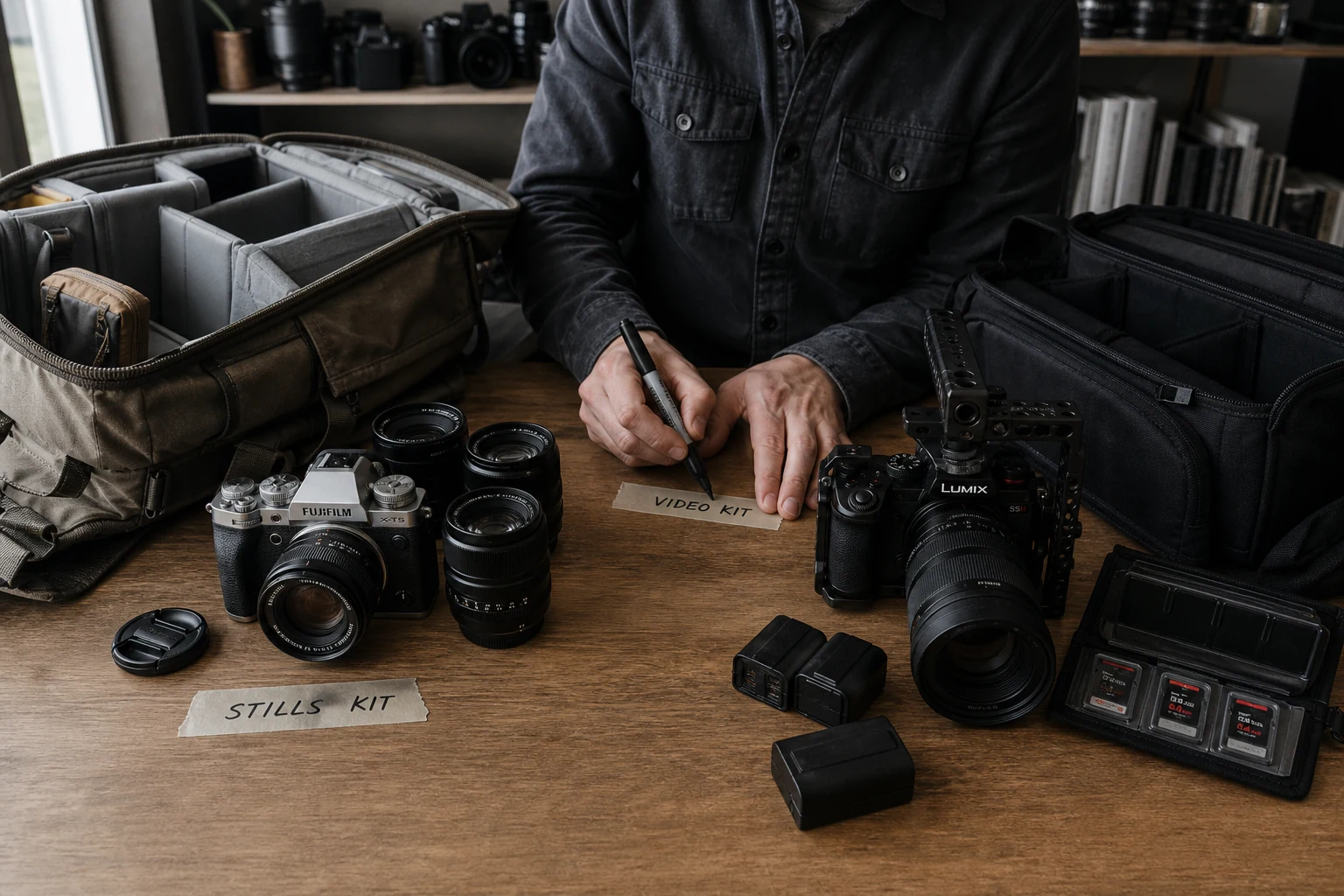
Create locations for the places gear can realistically be found: home office, studio cabinet, charging bench, vehicle kit, off-site storage, and on loan. Then group equipment into reusable rigs or categories without changing its physical location. A lens can belong to a portrait rig while still living in Cabinet 2.
- 01
Name the spaces
Label shelves, cabinets, cases, and bags with short names that anyone on the team can follow. - 02
Catalog one zone at a time
Finish one drawer or case before moving on. Partial records spread across the room are hard to verify. - 03
Attach the evidence
Photograph serial numbers and upload receipts while the item is in your hand. - 04
Assign a home
Give each item a default location even if it moves often. - 05
Build working kits
Create portrait, wedding, travel, or video rigs from the catalog so packing starts from a known baseline.
When does a camera gear spreadsheet stop working?
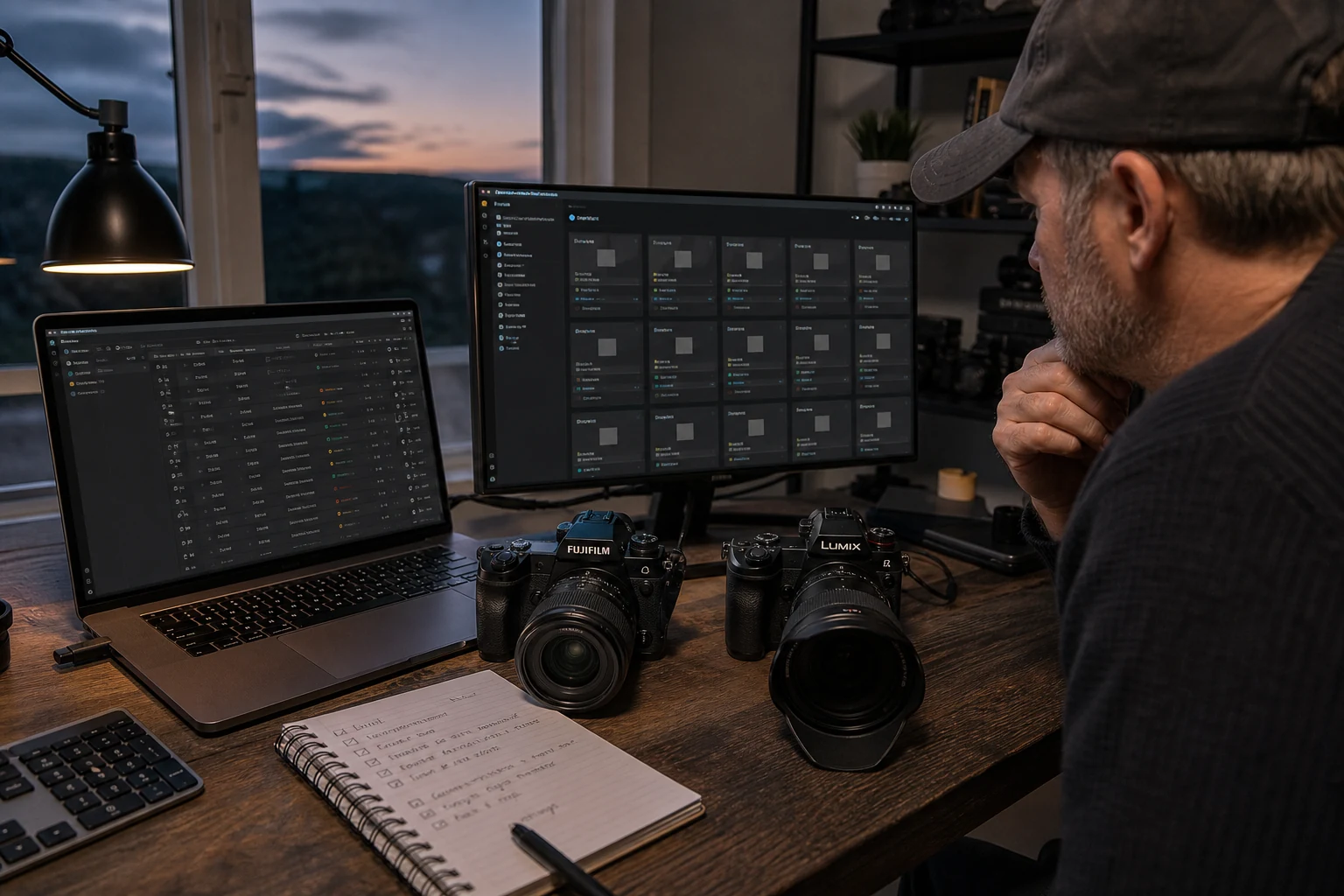
A spreadsheet is enough for a small, static collection. It becomes a liability when gear moves between locations, people, shoots, and repair providers. The problem is not the row count. The problem is the number of relationships each row must represent.
| Job | Spreadsheet | Dedicated gear organizer |
|---|---|---|
| List serial numbers | Works | Works with item photos and documents attached |
| Find a borrowed lens | Requires manual notes | Loan record, borrower, due date, and history |
| Prepare for a shoot | Separate checklist | Gear can be assigned to the shoot plan |
| Review maintenance | Extra tabs and reminders | Service records stay with the item |
| Prove ownership | Links may break | Receipts and item evidence stay together |
What keeps an inventory accurate after setup?
Treat the inventory as part of the gear handoff. Add a purchase when it arrives, log a loan before the item leaves, mark a return when it reaches its storage location, and close a maintenance record when the camera or lens is tested. Waiting for a quarterly cleanup guarantees gaps.
A ten-minute weekly review catches most drift. Check overdue loans, open maintenance, missing serial numbers, recent purchases, and gear assigned to upcoming shoots. The organizer earns its place by reducing uncertainty at pack time, not by looking complete on setup day.
How does GearDex organize a photography kit?
GearDex gives cameras, lenses, drones, filters, and accessories their own structured records. You can connect photos, serial numbers, purchase details, values, documents, locations, categories, loans, and maintenance to the same item, then use that inventory inside shoot plans and reports.
Start with the gear you would be most upset to lose or forget. Add those items first, attach the evidence you already have, and give each one a location. The rest of the catalog becomes much easier once the naming system is settled.
Frequently asked questions
What is the best way to organize photography gear?
Give every item a consistent name, serial number, photo, default location, ownership record, and readiness status. Use physical labels that match the names in your digital inventory.
Can I use a spreadsheet as a camera gear organizer?
Yes, for a small collection that rarely moves. Dedicated software is more useful when you need documents, item photos, loans, maintenance, values, locations, or shoot assignments.
Should small accessories go in a camera inventory?
Track accessories that are expensive, easy to forget, required for a rig, or hard to replace quickly. Group low-cost duplicates such as basic cables when individual serial-level tracking adds no value.
How often should I update my photography inventory?
Update records whenever gear arrives, moves, leaves on loan, returns, or receives service. A short weekly review is enough to catch missing details and overdue actions.